Live With Water
A Pattern Language Towards a Water-Oriented Urban Development
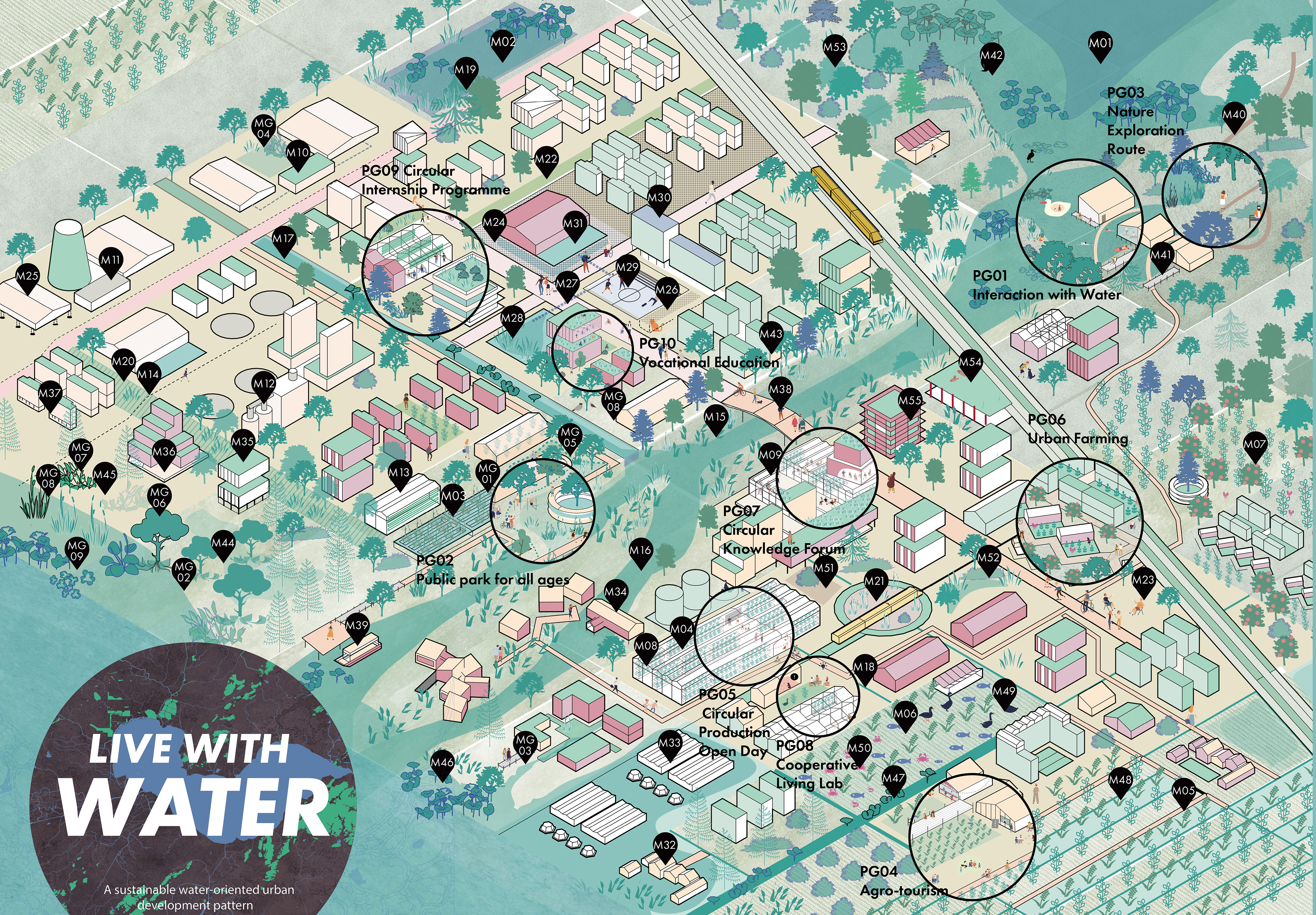
The Pattern Language Towards a Water-Oriented Urban Development is the design output for my Master’s project at TU Delft, the full research report is available at TU Delft repository.
Institution: TU Delft
Graduation Lab: Urban Metabolism and Climate
Time: Sep.2021 - Jun. 2022
Project supervisors: Kristel Aalber, Remon Rooij
Background
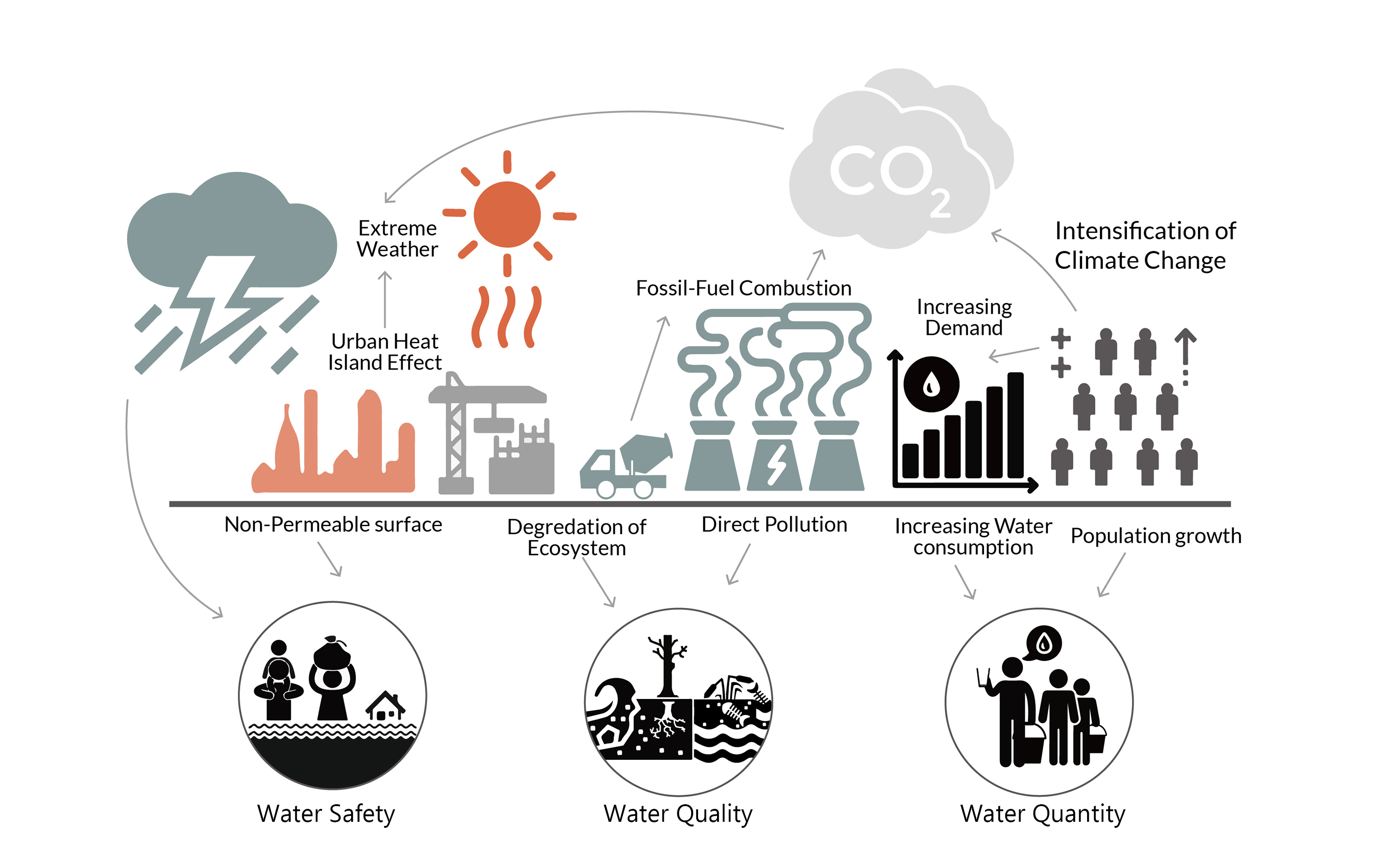
Our world today is confronted with escalating water challenges concerning its quality, quantity, and safety. These issues arise from factors such as the expanding global population, rapid urbanization, and their intersection with the impacts of climate change. Thus, it is high time that we reconsider:
How can we rebuild our relationship with water and live sustainably with it?
This urges a systemic change across various sectors and calls for collective action from different actors. Therefore, I design this pattern language which hopefully not only work as a technical manual to support future policymaking, planning, and design but also as a catalyst for systemic change that facilitates the communication and co-creation of solutions across different sectors, communities and individuals.
A pattern Language
The concept of pattern language is originally introduced to the world in A Pattern Language: Towns,Buildings, Construction by Christopher Alexander and his colleagues in 1977 as a design approach.
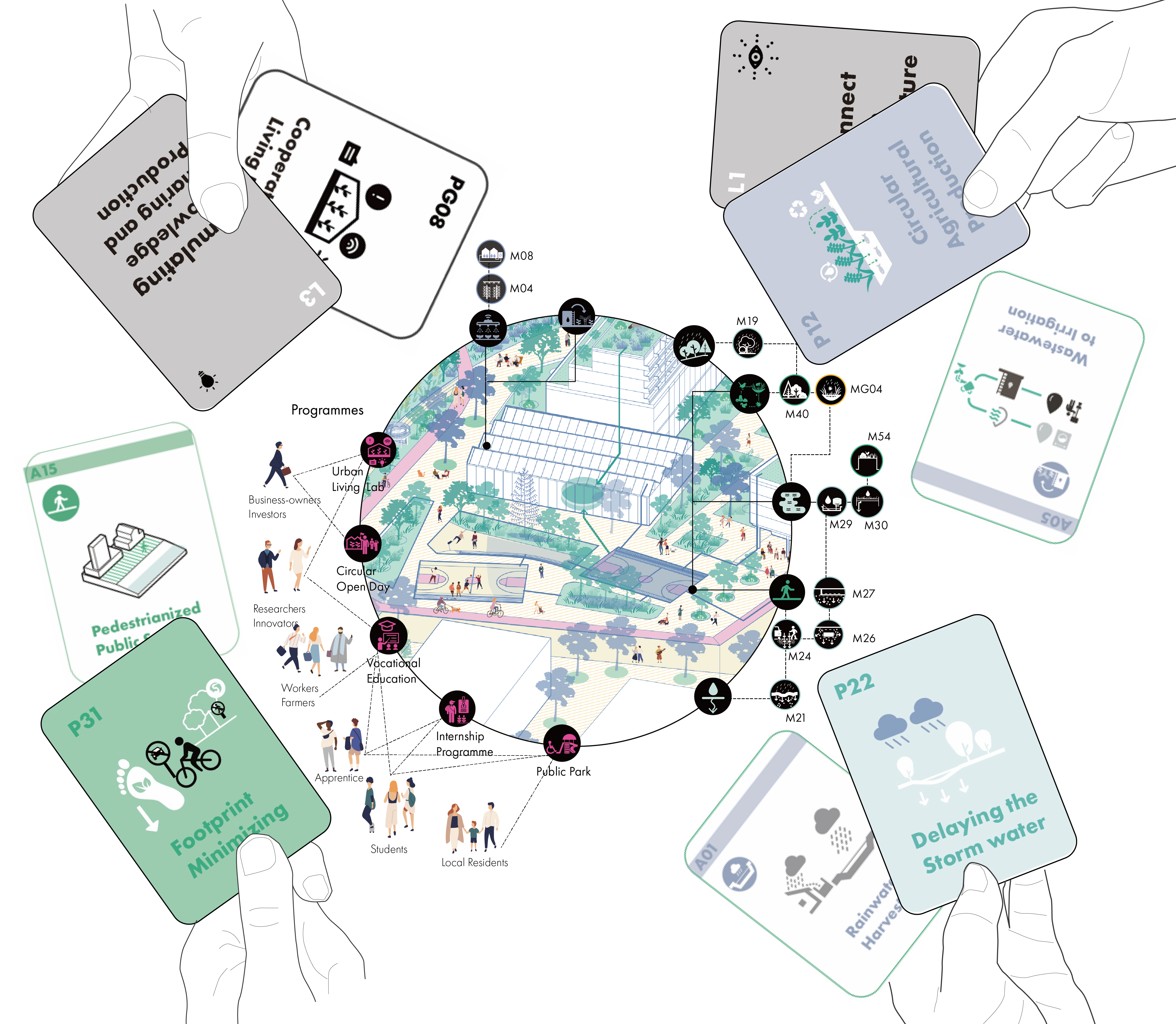
A solution network A single pattern provides a potential solution to one specific problem, while a cluster of patterns are connecting to each other through defined “syntax” which provides a interrelated strategy network in respond to a complicated issues.
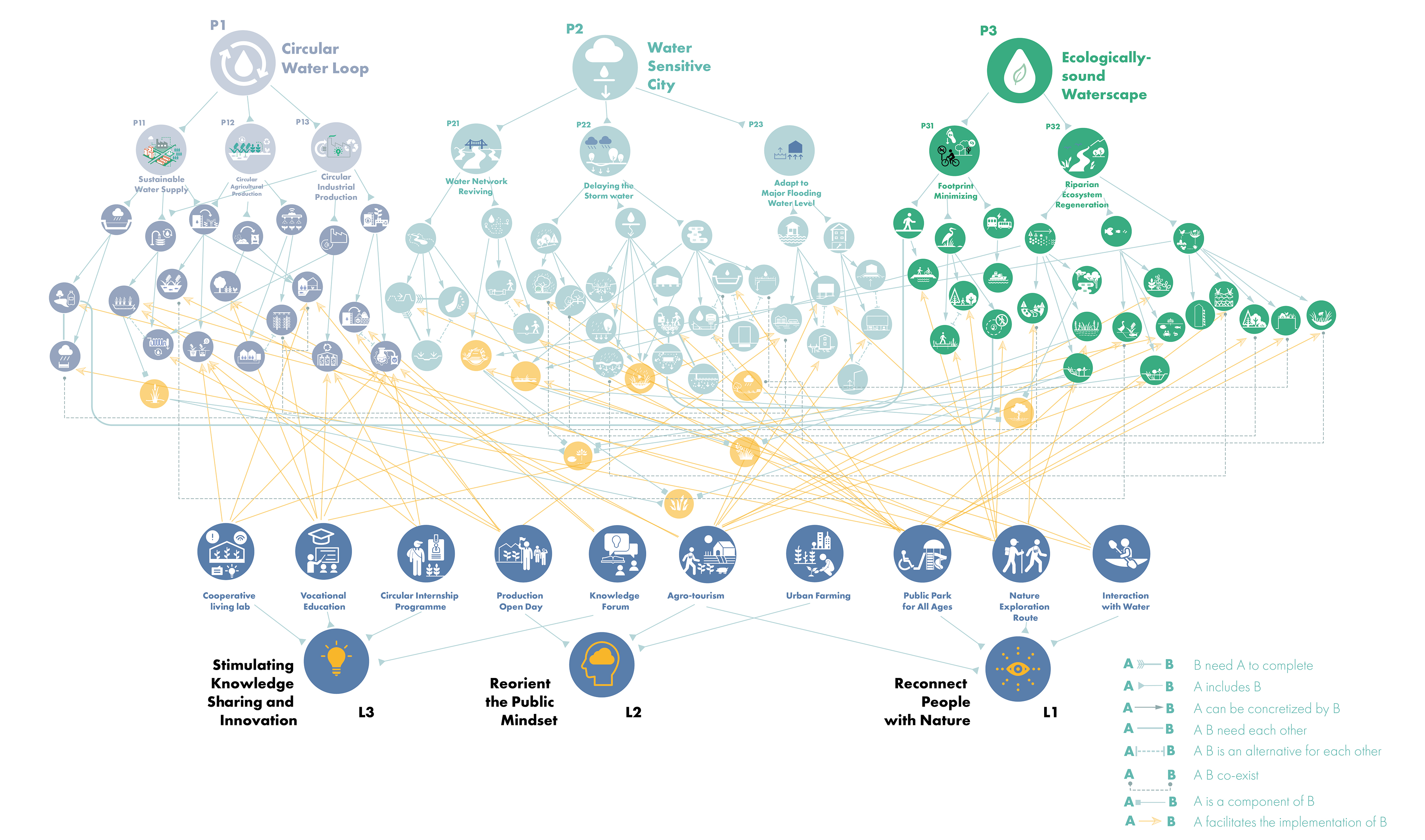
Catelog
This full pattern language centres around water, where I catagorize the patterns into five groups:
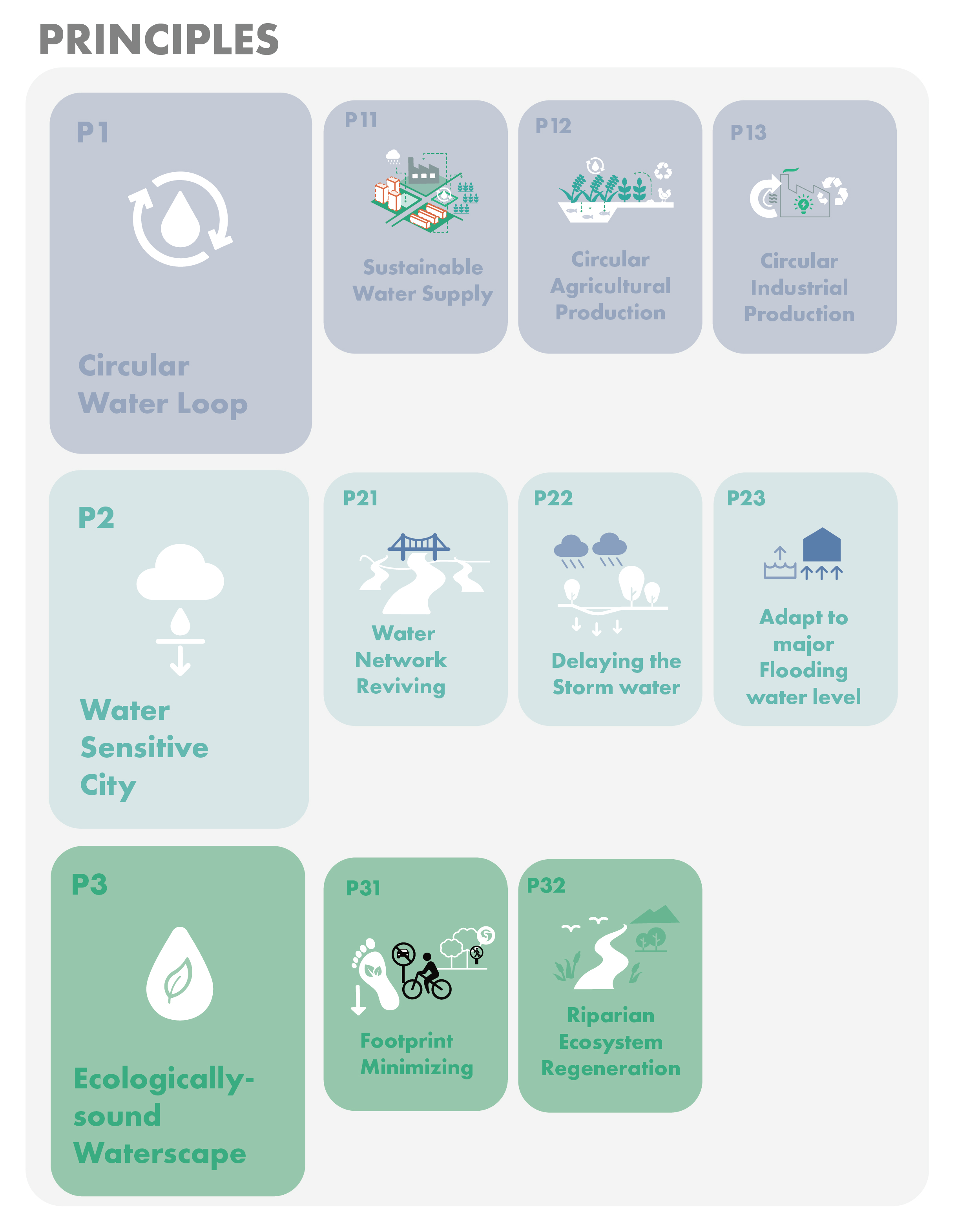
- Principles: Overarching principles must be followed in design and planning.
- Actions: More concrete actions should be taken following the principles.
- Measures: More practical choices that allow actions to be taken in different forms under a different contexts.
- Programmes: Activities, Events, and New policy agendas that facilitate the implementation of other patterns.
- Leverage: The main aims that programmes would serve, which ultimately drives systemic change.
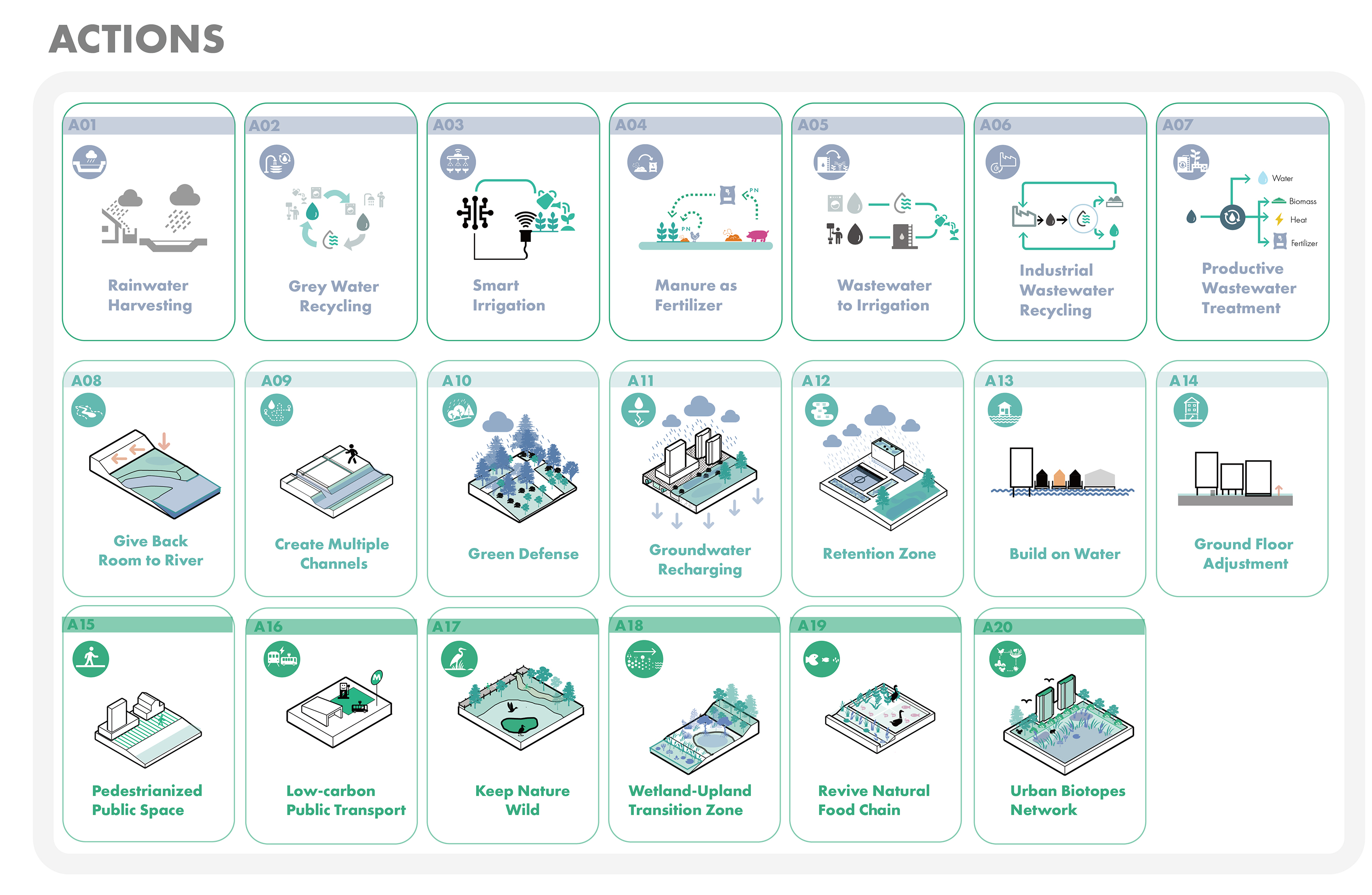
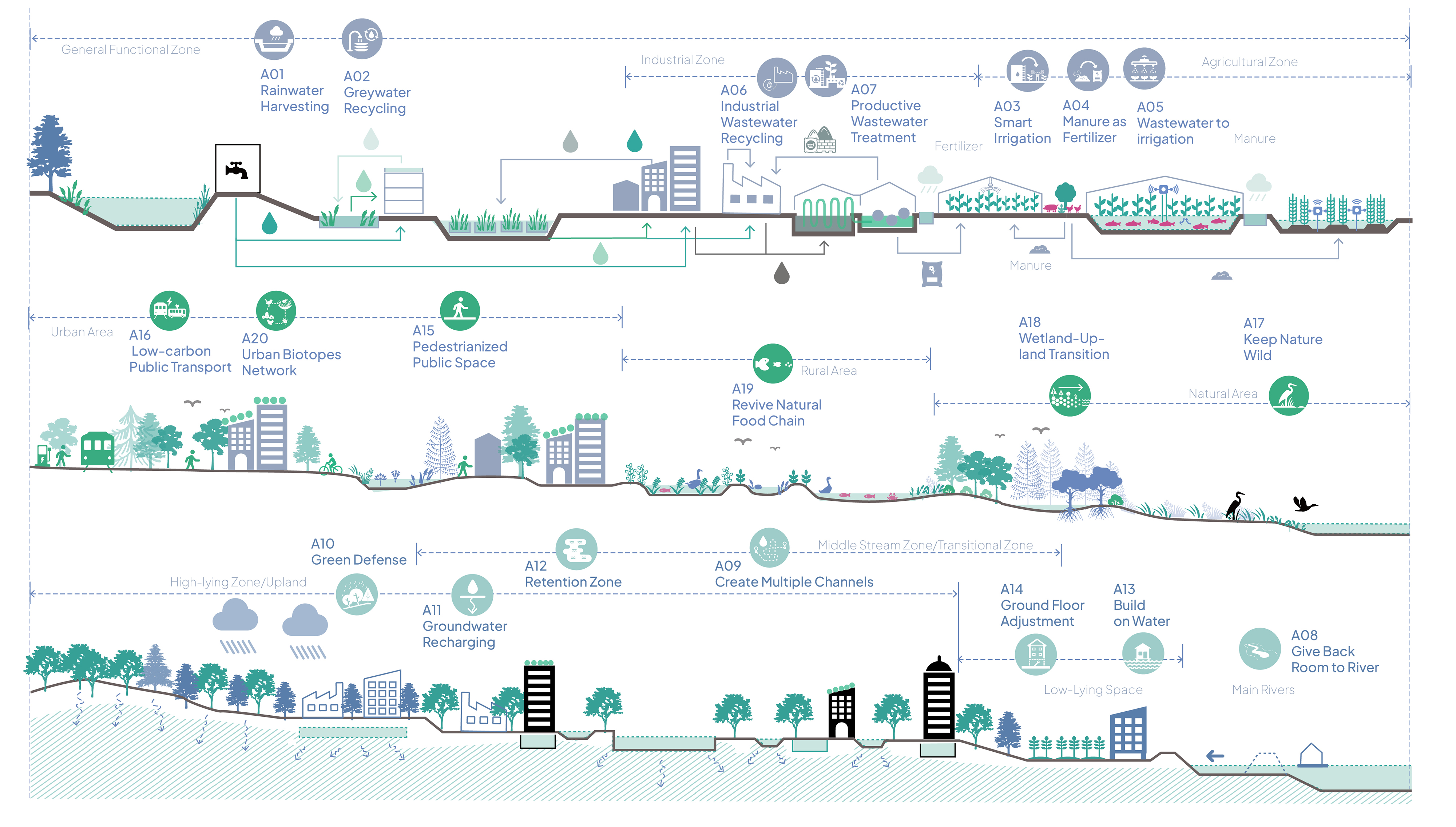
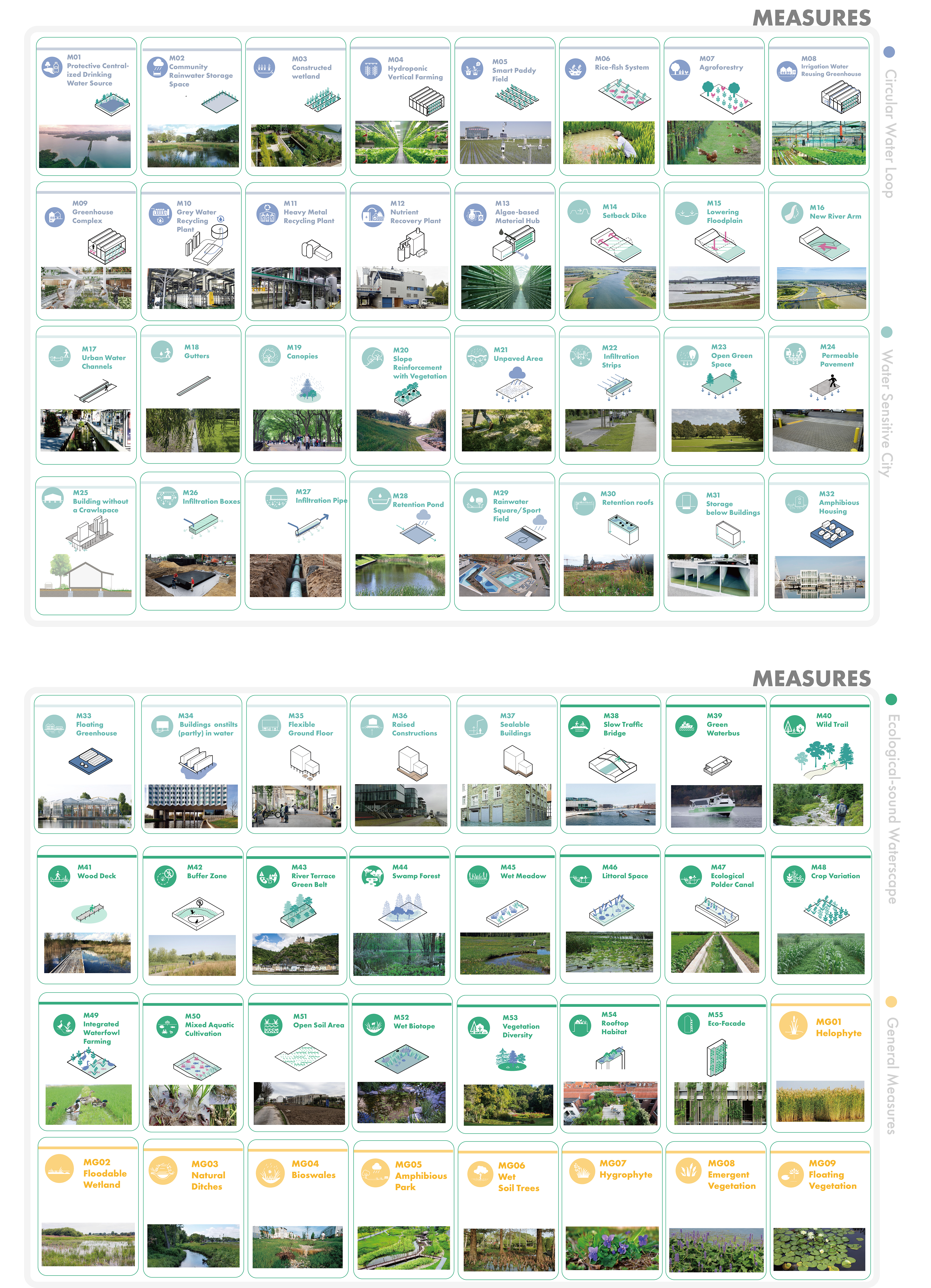
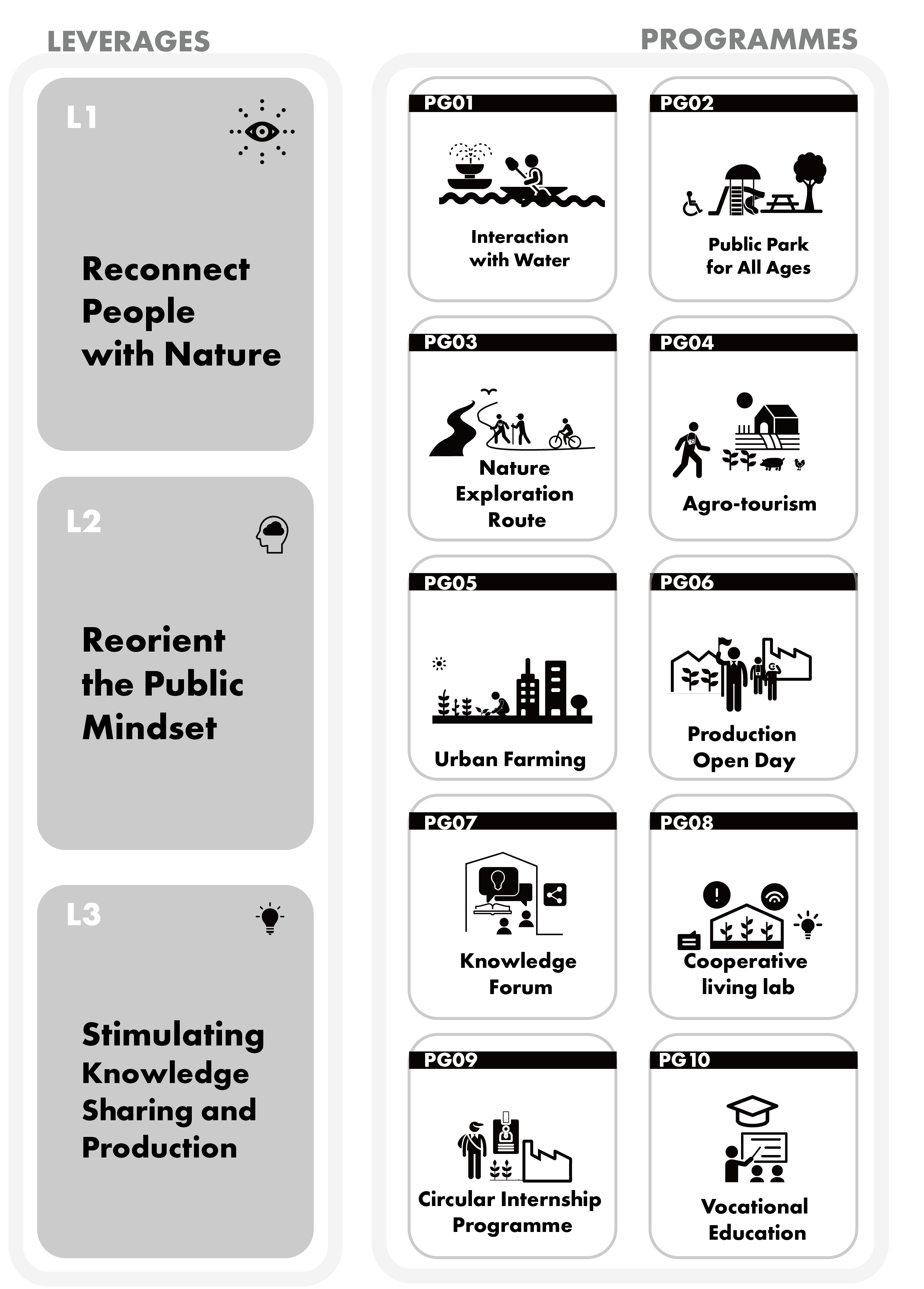
The Pattern Book
More detailed hypothesis, theoretical underpinnings and practical implications of each patterns can be found in the full pattern book below, including explaination and clarification regarding who is this booklet for and how to use this booklet.Each of the pattern has also been assessed based on SDG goals, their transferability and contribution to water system.
The Implementation of the Patterns
Further implimentation of the patterns can be seen in the pilot project The 2030 Vision for Shangpai Town , where a future water-oriented built environment is imaged on both district-scale and block-scale following a co-creation via this pattern language.
Acknowledgement
All the visualizations above are the creation of Jiaqi Wang. The booklet above has already been published as an output of the Master Thesis in TU Delft, To reference this document use: http://resolver.tudelft.nl/uuid:ec611a54-07c1-4801-9bbd-2d4afd8ac120 I would like to express my heartfelt appreciation to Kristel Aalber and Remon Rooij for their invaluable guidance throughout my graduation project.

Look forwards to getting in touch with you!
☕ Powered by github
based on Pudhina theme by Knhash 🛠️